Teaching
How I teach
My classes aim to make modern economic ideas accessible and to show how economics promotes disciplined, clear thinking about problems of real-world complexity. In the undergraduate growth course, we build quantitative tools and use them to interpret data, evaluate policy claims, and recognize reasoning that sounds good but does harm. In the first-year Ph.D. course, we work through a series of dynamic macroeconomic models that illustrate the value and the risks of simplification and teach how to look at data through the lens of theory.
I set high standards for the students and pair them with flexibility. Assignments are built as sequences of progressively harder steps toward a clearly defined mastery goal, and effort is always rewarded. Beyond the classroom, I treat my contact with students as a chance to talk about workplace skills, careers, and life in graduate school, including the stresses that come with it.
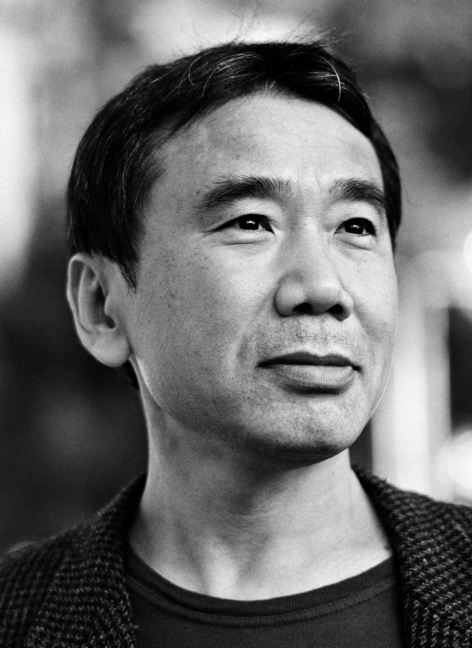
“Pain is inevitable, suffering is optional.”
— Haruki Murakami
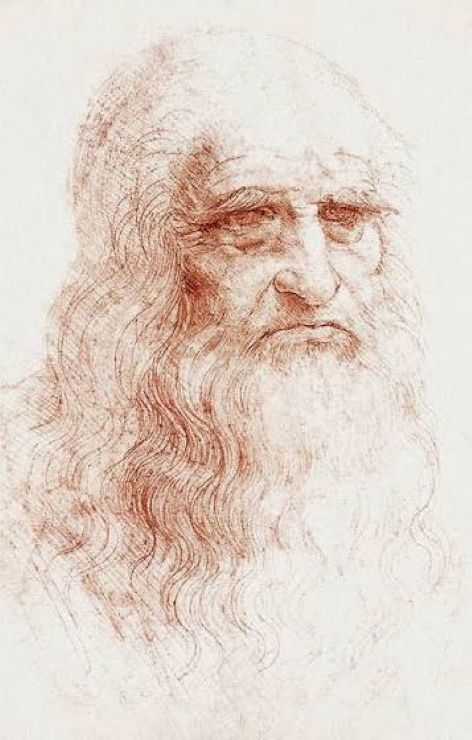
“The noblest pleasure is the joy of understanding.”
— Leonardo da Vinci

“Inspiration exists, but it has to find you working.”
— Pablo Picasso
University of Michigan, Department of Economics
| 2027–present |
Macroeconomic Theory for Applied Economists (Master’s)
This course summarizes the lessons that macroeconomic theory holds for applied economists whose careers will involve economic indicators, macroeconomic data, and policy questions. A unit on measurement explains how the main macroeconomic variables are defined and constructed and how real-world data map onto textbook models, so that indicators are read correctly. A unit on growth covers the mechanics of growth, growth accounting, and how the economy responds over time to changes in its environment. A unit on financial assets and corporate finance links the real and financial sides of the economy in one framework. A unit on government debt explains the consequences of public borrowing when debt is an interest-bearing asset held by households and interest rates are set in equilibrium with production and capital accumulation. A unit on the value of money distinguishes nominal from real variables, builds the foundation for monetary policy, and connects the value of money to the value of government debt. |
| 2007–present |
Macroeconomic Theory (first-year Ph.D.) Topics by unit (PDF)
This course is broadly about the long-run macroeconomic phenomena. We will focus on analyzing standard workhorse dynamic general equilibrium growth models with no uncertainty. Particular attention will be paid to the correspondence between the models and the commonly used macroeconomic data. Our analysis is aimed at developing understanding of relationships between macroeconomic variables and their evolution through time. This understanding will help us get insights into the links between the financial markets and the real economy, the mechanics and sources of economic growth and the role of expectations in shaping macroeconomic outcomes. The class is organized into units: measurement, production and investment, financial markets, the Solow model, the overlapping generations model, the neoclassical growth model, and endogenous growth. |
| 2000–present |
Growth Theory (advanced undergraduate) Topics by unit (PDF)
This advanced undergraduate course is about the modern approach to analyzing long-run macroeconomic phenomena. Analysis is aimed at developing an understanding of quantitative relationships between macroeconomic variables (e.g. output, capital, consumption, investment) and their evolution through time. This understanding will help interpret historical macroeconomic data and get insights into mechanics and sources of economic growth, the reasons behind income disparities across countries, the role of intellectual property in the process of growth and the influence of government actions on economic prosperity. The class is organized into units: macroeconomic measurement, production and investment, financial markets and the macroeconomy, understanding mechanics of growth, understanding cross-country income inequality, and incentives to innovate as a cause of growth. |
| 2017 | Intermediate Macroeconomics |
| 2012 | Financial Markets and the Macro Economy (intermediate undergraduate) |
| 2007 | Continuous Time Finance and Stochastic Dynamic Optimization (second-year Ph.D.) |
| 1999–2007 | Industrial Organization and Government Regulation of Industry (advanced undergraduate) |
| 1999–2005 | Mathematics for Economists (Master’s) |
New Economic School, Moscow
| 2008, 2011–2013 | Macroeconomics of Aggregate Fluctuations (Master’s) |